

- Mushroom nootropics like Lion’s Mane have clinical evidence supporting cognitive benefits mainly in older adults with memory decline.
- Quality products should specify fruiting body extract, beta-glucan content above 20%, and third-party testing.
- Benefits are gradual and best achieved as part of a broader healthy lifestyle, not a quick fix.
Mushroom-based brain supplements are everywhere right now, and the claims range from plausible to wildly overblown. Some products promise overnight genius; others quietly deliver real, measurable support for memory and focus. The challenge is knowing which is which. Behind the marketing noise, specific fungi have genuine clinical evidence for cognitive effects, particularly in older adults and those with early memory decline. This guide breaks down the active compounds, the actual research, who benefits most, and how to pick a supplement that isn’t just expensive powder in a capsule.
Table of Contents
- What are mushroom nootropics?
- Top mushrooms used as nootropics and their evidence
- Benefits, limitations, and who actually sees results
- How to use mushroom nootropics safely and choose the right supplement
- The real story: what most brands don’t tell you about mushroom nootropics
- Find high-quality, evidence-backed mushroom nootropics
- Frequently asked questions
Key Takeaways
| Point | Details |
|---|---|
| Clinically studied mushrooms | Lion’s Mane, Reishi, and Cordyceps are the most evidence-backed mushroom nootropics. |
| Gradual, not instant effects | Most benefits require consistent use over weeks or months, especially for cognitive support. |
| Quality and source matter | Choose fruiting body extracts with validated beta-glucan content for best results. |
| Consider safety and interactions | Consult a professional if you have medical conditions, allergies, or take medications that might interact with mushroom nootropics. |
What are mushroom nootropics?
Nootropics are substances that support cognitive functions like memory, focus, and mental clarity without causing significant harm or dependency. The term covers everything from caffeine to prescription drugs, but mushroom nootropics occupy a specific niche: edible and medicinal fungi with bioactive compounds that interact with brain chemistry and nervous system health.
The most studied species include Lion’s Mane (Hericium erinaceus), Reishi (Ganoderma lucidum), and Cordyceps (Cordyceps militaris or sinensis). Each one contains a distinct set of active compounds, and those compounds do very different things in the body. Understanding them is the first step to making an informed choice. If you want a broader foundation, this nootropics guide covers the wider landscape of cognitive supplements.
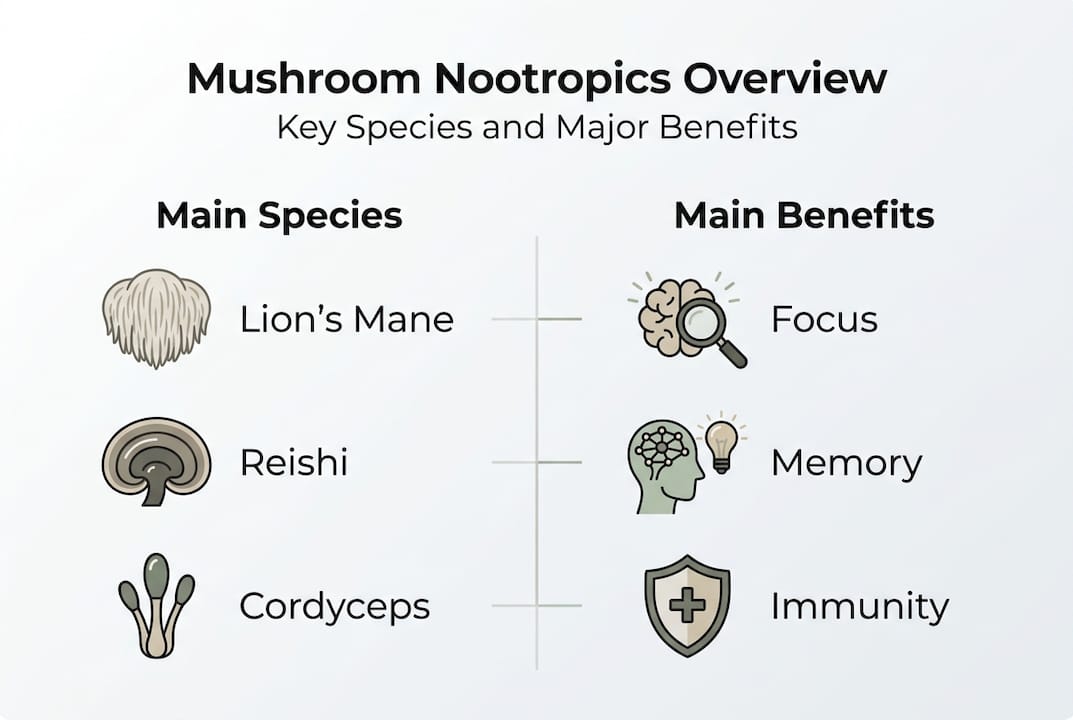
Key bioactive compounds by mushroom:
| Mushroom | Key compounds | Primary mechanism |
|---|---|---|
| Lion’s Mane | Hericenones, erinacines | NGF stimulation, neuroprotection |
| Reishi | Triterpenes, ganoderic acids | Stress modulation, immune support |
| Cordyceps | Cordycepin, beta-glucans | Energy metabolism, oxygen utilization |
As research confirms, beta-glucans provide immune and neuroprotective effects, hericenones and erinacines in Lion’s Mane stimulate nerve growth factor (NGF), triterpenes and ganoderic acids in Reishi reduce stress response, and cordycepin in Cordyceps supports cellular energy.
NGF is a protein that promotes the growth and maintenance of neurons. When Lion’s Mane stimulates NGF production, it may support the brain’s ability to form and preserve connections, which is why it gets the most attention for cognitive applications.
Not all mushroom supplements are equivalent. The part of the fungus used matters enormously. Fruiting body extracts contain the highest concentration of active compounds. Mycelium grown on grain, a cheaper alternative, often contains more starch than actual bioactive content. Standardization, meaning a guaranteed percentage of beta-glucans or other key compounds, is the clearest signal of a quality product.
How to read a mushroom supplement label:
- Check whether it specifies fruiting body or mycelium.
- Look for a beta-glucan percentage (ideally above 20%).
- Confirm third-party testing is listed.
- Verify the dose matches studied amounts (typically 500mg to 3g per day depending on species).
- Ignore proprietary blends that hide individual ingredient amounts.
Pro Tip: “Mushroom extract” and “mushroom powder” are not the same thing. Extracts are concentrated and standardized; powders may contain very little of the active compound.
Top mushrooms used as nootropics and their evidence
With the fundamentals clear, the next step is to look at which mushrooms actually show evidence for cognitive enhancement, and what that evidence means in practice.
Lion’s Mane has the strongest research base for direct cognitive support. Clinical trials show that a randomized controlled trial with 30 participants over 16 weeks at 3g per day improved cognitive scores in people with mild cognitive impairment (MCI). A separate trial with 31 participants over 12 weeks improved MMSE scores, a standard dementia screening tool. An acute study with 18 participants found no broad global effect but did improve performance on a fine motor task. The pattern is consistent: effects are real but specific, and most pronounced in people who already have some cognitive decline.
Evidence summary by mushroom:
| Mushroom | Study type | Population | Key finding |
|---|---|---|---|
| Lion’s Mane | Multiple RCTs | Older adults, MCI | Improved memory and cognitive scores |
| Reishi | Observational, small trials | General adults | Reduced fatigue, improved sleep |
| Cordyceps | Meta-analysis | Athletes, active adults | Improved VO2max and endurance |
Reishi and Cordyceps take a more indirect route to cognitive support. Reishi’s primary effects involve stress reduction and sleep quality, both of which have downstream effects on mental performance. Cordyceps is better studied for physical endurance. A meta-analysis on Cordyceps confirms meaningful improvements in endurance and VO2max, which may translate to better oxygen delivery to the brain, but direct cognitive data remains limited.
For anyone exploring mental performance boosters or interested in the intersection of longevity and brain health, the longevity supplements science behind these compounds is worth understanding before committing to a stack.
“The evidence for Lion’s Mane is promising, particularly for populations with existing cognitive concerns, but the field still lacks large, long-term randomized controlled trials in healthy adults.”
Key takeaways from the current research:
- Effects are gradual, typically building over weeks to months, not days.
- Study populations matter: results in MCI patients don’t automatically apply to healthy 30-year-olds.
- Dose and extract quality significantly influence outcomes across all studies.
- No mushroom nootropic currently replaces established cognitive health interventions.
Benefits, limitations, and who actually sees results
Understanding the studies is vital, but it’s just as important to know what to realistically expect, and who’s most likely to benefit.
The clearest beneficiaries based on current evidence are older adults and people with mild cognitive impairment. For this group, Lion’s Mane in particular shows consistent improvements in memory recall, cognitive test scores, and daily functioning. For healthy younger adults, the picture is murkier. Reviews of the evidence note that benefits are often gradual rather than acute, results in healthy young adults are mixed, most studies use small samples, and marketing frequently overpromises for general healthy users.

This doesn’t mean mushroom nootropics are useless for healthy adults. It means the effects are subtler and harder to measure. Someone managing chronic stress, poor sleep, or early cognitive fatigue may notice more than someone already operating at peak performance.
Who is most likely to benefit:
- Adults over 50 with early memory concerns.
- People managing high cognitive load over extended periods.
- Individuals with poor sleep or elevated chronic stress.
- Those combining mushroom nootropics with other evidence-based habits.
Common limitations in the research:
- Small sample sizes (most trials under 50 participants).
- Short study durations (8 to 16 weeks).
- Lack of standardized dosing across studies.
- Inconsistent extract quality between commercial products and research-grade materials.
- Limited data on long-term use beyond 6 months.
Pro Tip: If you’re building a nootropic routine, mushroom extracts work best as part of a broader strategy that includes sleep optimization, regular exercise, and adequate protein intake. They’re a support layer, not the foundation.
The dose used in studies also matters more than most product labels suggest. Many commercial products contain 250mg to 500mg of mushroom powder per serving, while clinical trials typically use 1g to 3g of standardized extract. That gap alone explains why many users report no effect.
How to use mushroom nootropics safely and choose the right supplement
With an honest look at the evidence and limitations, the last piece is using these supplements safely and effectively.
Safety is generally favorable. Clinical and case report data shows mushroom nootropics are well tolerated by most adults, with mild side effects like digestive discomfort or skin irritation being the most common. Rare cases of allergic reactions have been documented, including one serious respiratory case, so anyone with known mushroom allergies should avoid these products entirely.
Safety checklist before starting:
- Avoid if you have a known mushroom or mold allergy.
- Use caution with blood thinners (Reishi may have mild anticoagulant effects).
- Consult a doctor if you have an autoimmune condition, as beta-glucans stimulate immune activity.
- People with diabetes should monitor blood sugar, as some compounds may affect glucose metabolism.
- Pregnant or breastfeeding individuals should avoid use until more safety data exists.
What to look for in a quality product:
- Fruiting body extract, not mycelium on grain.
- Beta-glucan content above 20%, listed on the label.
- Third-party testing certificate (COA) available on request or displayed on the website.
- Dose aligned with studied amounts (1g to 3g for Lion’s Mane).
- No unnecessary fillers, artificial additives, or proprietary blends that obscure dosing.
One underappreciated risk is contamination. Mushrooms are bioaccumulators, meaning they absorb heavy metals and toxins from their growing environment. Without third-party testing, there’s no way to verify a product is free from lead, arsenic, or pesticide residue. This is not a theoretical concern; it’s a documented issue in the supplement industry. Third-party testing is non-negotiable for anyone serious about clean supplementation. Returning to the choosing nootropics framework can help you apply these criteria systematically across any supplement you evaluate.
The real story: what most brands don’t tell you about mushroom nootropics
The supplement market has a habit of taking early-stage research and amplifying it into certainty. Mushroom nootropics are a clear example. The evidence for Lion’s Mane in MCI is promising, but it’s been stretched to cover every adult who wants sharper focus by Tuesday.
Most commercial products are underdosed, use mycelium instead of fruiting body, and carry no standardization guarantee. That means a large portion of what’s sold as a mushroom nootropic delivers little to none of the compounds that actually showed effects in clinical trials. The label says Lion’s Mane; the capsule contains mostly grain starch.
For healthy adults under 40, the honest answer is that you may notice very little. That’s not a failure of the mushroom; it’s a mismatch between the research population and the marketing target. The real wins come from pairing evidence-based doses with consistent sleep, exercise, and nutrition. Mushroom nootropics can support that system, but they won’t replace it. Choosing products with verified sourcing, like those reviewed through nootropics selection advice, is the only way to know you’re getting what the research actually tested.
Find high-quality, evidence-backed mushroom nootropics
If you want to try mushroom nootropics from trusted, evidence-driven sources, here’s where to start. NeuroStack sources only standardized, third-party tested mushroom extracts for its cognitive supplements, with full transparency on sourcing, beta-glucan content, and formulation rationale. Every product is designed to match the doses and extract types used in clinical research, not just the minimum needed to put a mushroom name on a label. Explore premium mushroom nootropics across the full product range, review the science behind each compound on the ingredients for health page, or go straight to our ingredients for sourcing and standardization details.
Frequently asked questions
Are mushroom nootropics safe for daily use?
Most mushroom nootropics are well tolerated for daily use by healthy adults, but mild side effects and drug interactions are possible. Anyone with existing health conditions should consult a healthcare professional before starting.
How long does it take to notice benefits from mushroom nootropics?
Benefits are typically gradual and may take several weeks to months of consistent use before becoming noticeable, particularly for cognitive outcomes.
Which mushroom supplement is best for cognitive support?
Lion’s Mane mushroom, specifically fruiting body extracts with verified beta-glucan content, currently has the strongest clinical evidence for cognitive support, especially in adults with mild cognitive impairment.
Who should avoid mushroom nootropics?
Avoid these supplements if you have mushroom allergies, a bleeding disorder, or are taking blood thinners, and always verify potential interactions with your healthcare provider before use.
Recommended
- How to choose nootropics: a practical guide (2026) – NeuroStack
- Step-by-step nootropic routine: boost focus in 2026 – NeuroStack
- Top mental performance boosters list for focus and brainpower – NeuroStack
- Longevity Supplements Science: Effective Evidence-Based Insights – NeuroStack
- What makes MINDBOOST more structured than generic nootropics? – BioEssentials


0 comments